Rose Petal Candles Choosing the Right Petals
Different types of flowers have different consistencies, colors and meanings, so you will want to make sure that you choose flowers that fit the mood and style of your candle. For example, rose petals are soft and romantic, while daisies are soft and playful. You also want to choose petals that are hearty enough to hold up to the wax, and will not wilt or discolor when they get hot. Petals can be taken from flowers you have picked in your own garden, or from flowers that you get from a florist. The petals should be free of pesticides and should be dried if they are not fresh.
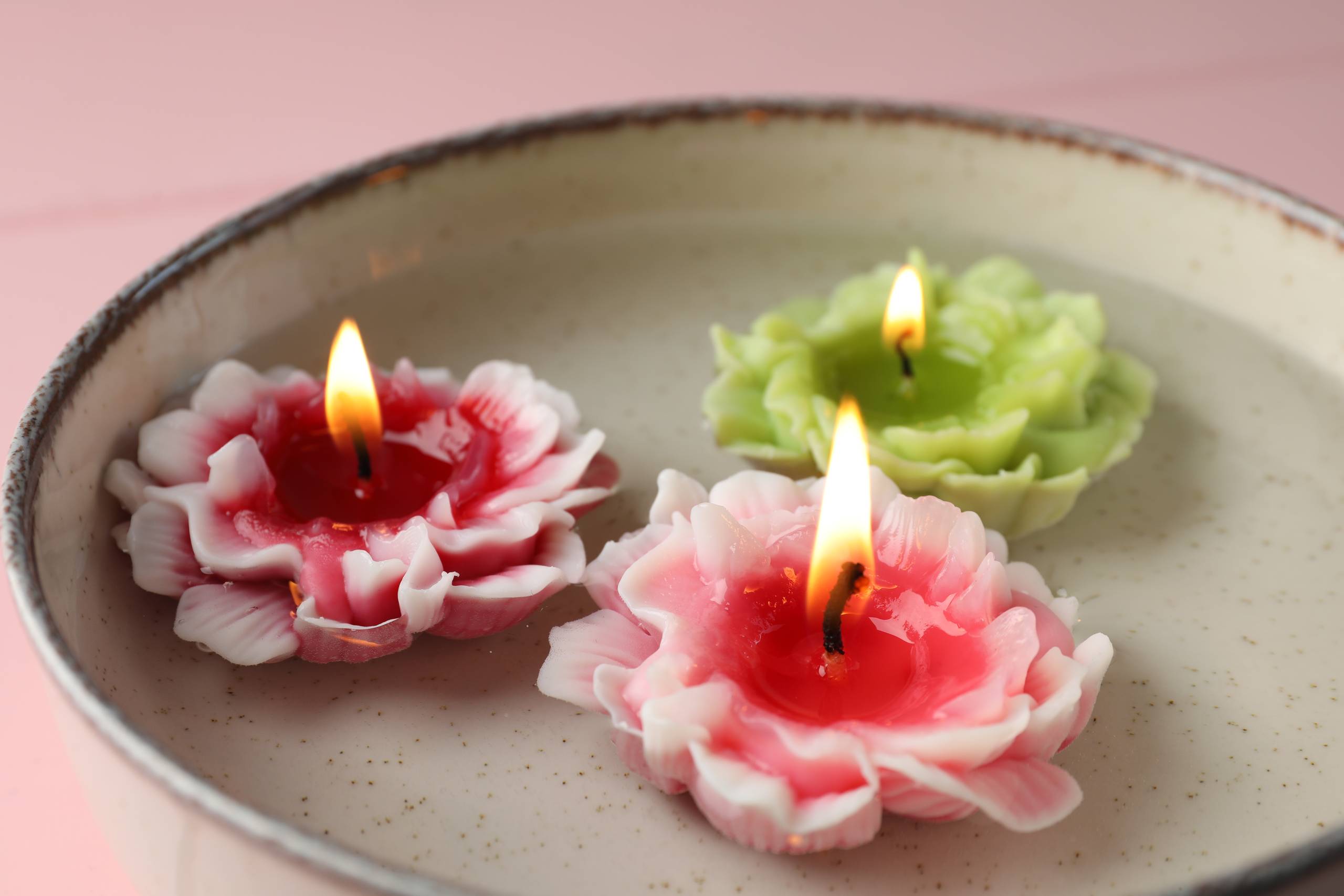
Not only do you choose the petals for their colors, but for their properties and how they will look when embedded in a particular wax, whether it be soy or beeswax, as this will also determine the clarity and luminosity of your candle. Thinner petals like lavender or forget-me-nots will embed completely, producing a misty effect that will cast delicate shadows on your walls. Thicker petals, like sunflowers or peonies, provide interesting shadows and are best used for large candles that will be displayed on your mantle or dinner table. Humidity and the thickness of your petals will determine if they adhere well, so you may need to press some of them or layer them in a specific way. This process allows you to create as though you are painting a picture with the wax as your paint and the petals as your brushstrokes.
This would be a good time to talk about which petals to use and how to keep them as “green” as possible. You’ll want to choose flowers that are in season to ensure that they are the freshest available and that they’ve required the least amount of resources to get to you. Consider using flowers from your own garden or yard. If you have a flower bouquet that’s starting to wilt, you can use those petals too. Air dry them or place them in a container with silica gel to speed up the drying process and retain their color. You want the color of your petals to remain as vibrant as possible because, once they are added to the candle, they will not retain their luster. Think of the petals as carrying their own stories of growth, harvest, drying and now inclusion in your candle. They too have started as something totally different than their finished product.
With the petal type, it’s more about the look and the colors and the scent. Pansy and viola is more pastel colors, so it’s very soothing, it’s very calming. You can put them in the bedroom or wherever you want to relax. With the marigold, it’s more like red, orange, so it’s very warm. If you put it in the living room or in a very active room, it would be more energetic. I would use the same color of the essential oils. So it’s a multi-sensory thing. You have the visual, you have the color, you have the scent. Even the texture, because you have the petals. It’s really hard to tell which one would be the best, but you just have to try. You have to pick them up and just see what works. I love when people notice the candles and ask about them. I like to inspire people to make their own.
On a larger scale, learning which petals to use enables artists to create themed candles based on holidays, feelings, or special events. A candle celebrating a wedding might include the petals of white lilies, while a candle commemorating fall may use maple leaves and chrysanthemum flowers. This ability to tailor a candle’s ingredients indicates that anyone can make this craft their own, regardless of their experience, for no one decision is wrong. Ultimately, it is the petals that give the candle its character, its personality, and its life. They show that sometimes it’s the small things taken from nature that give objects their beauty.